
AI in everyday life is already shaping how we shop, create, and make decisions — often without us noticing. This piece explores where it’s working, why it matters, and the risks hiding beneath the convenience.
Table of Contents
If you’ve used ChatGPT once or twice, you’re already more familiar with AI than you might think. For many people, though, that’s where their understanding stops. They rarely consider artificial intelligence as more than a chatbot they occasionally turn to for help polishing an email or brainstorming ideas. (Or, increasingly, offering a bit of unpaid therapy.)
But it’s likely your interaction with AI doesn’t end there. Unlike an app you download and choose when to open or close, AI in everyday life rarely announces itself. It shows up quietly inside tools and systems people already use, and it’s shaping many of our digital experiences.
In 2026, AI has moved well beyond chat windows and into both the background and foreground of daily life. The upside is that you don’t need to consider yourself tech-savvy to benefit from this shift. The downside is that AI use has subtly moved from a choice to a default. If you use a phone, tablet, or laptop, you’re almost guaranteed to be already participating.
If this has you excited, concerned, or even just curious, I’ve put together this piece for casual AI users. It will help you understand where AI in everyday life is already being integrated, why it matters, and what risks are emerging alongside the convenience. The goal is to help you both be more knowledgeable about what options you have for leveraging AI and be aware of silent integrations.
Breaking down AI without the jargon
Before digging into some of the more surprising examples of AI in everyday life, it helps to clarify the terms we’re actually talking about. Part of the confusion around AI comes from how loosely the term is used. AI in everyday life isn’t one thing. It’s a collection of systems working behind the scenes.
Here’s a quick breakdown of the terms you’ve likely heard, without the technical overload.
- Artificial intelligence (AI): The umbrella term. It refers to systems designed to perform tasks that typically require human intelligence, such as recognizing patterns, making predictions, or deciding the fastest route for your morning commute.
- Generative AI (GenAI): A specific category of AI focused on creation. While traditional AI might categorize or predict, generative AI produces new content — including text, images, audio, or code — based on patterns learned from existing data.
- Large language models (LLMs): The engines behind most modern text-based AI. These models are trained on massive amounts of language to understand, summarize, and generate human-like text.
- Chatbots: The interface layer. Tools like ChatGPT act as conversational wrappers that allow people to interact with an underlying language model.
- AI agents: The doers. Unlike a chatbot that responds to a single prompt, an AI agent can carry out multi-step tasks, such as monitoring a timeline and automatically triggering actions when conditions are met.
- Open-source vs. proprietary models: A distinction about ownership and control. Open-source models can be inspected and adapted publicly, while proprietary models are owned and managed by specific companies.
For more quick learning, check out Jeff Su’s video: 99% of Beginners Don’t Know the Basics of AI.
Where AI in everyday life is already working
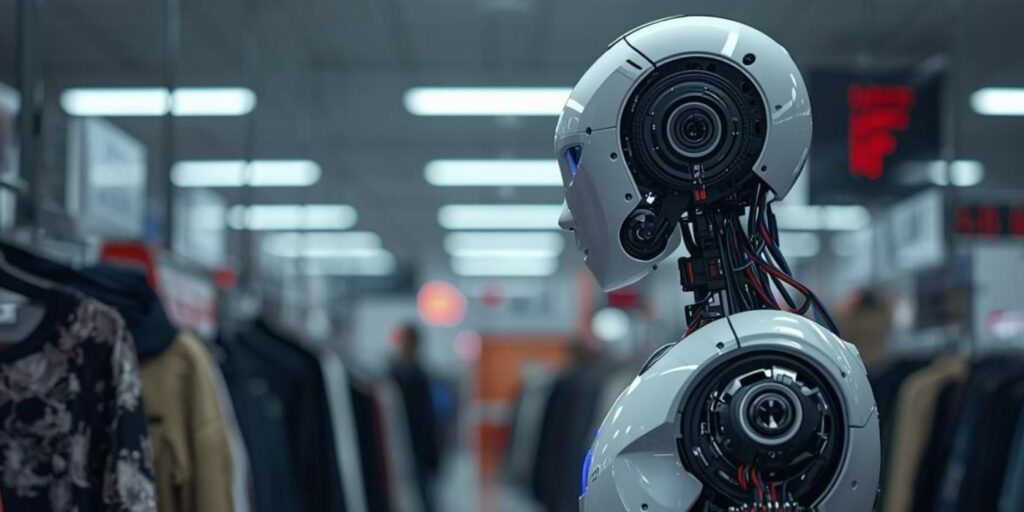
The next phase of AI is defined less by new interfaces and more by contextual intelligence. Instead of waiting for prompts, AI systems are beginning to respond to habits, environments, and real-time conditions. The technology fades into the background as experiences adapt around people.
One of the biggest shifts happening now is that AI is no longer presented as a standalone product. Instead, it’s being built directly into tools people already use. That makes AI in everyday life largely invisible to the untrained eye.
And training that eye is harder than most people expect. Fewer than 10 percent of people can reliably distinguish AI-generated video from real footage. (Try your skills here if you don’t believe me.) As the technology improves, the line between “AI-powered” and “normal” continues to blur.
Search engines, email platforms, document editors, and collaboration tools now include AI features by default. They summarize long content, suggest clearer phrasing, and surface answers faster — all without requiring a separate app or explicit prompt.
This is what AI in everyday life increasingly looks like. It’s not flashy; it’s embedded. And if you’re not closely following tech news, it may already be working for you without you realizing it.
If you’re curious about how this same invisibility is reshaping work — and who is most affected — you can explore that in more depth in AI Job Displacement: Who’s Most at Risk — And What Biases Are Being Amplified? But for now, we’re going to explore some of the more surprising places AI has snuck into our lives.
AI in shopping and checkout experiences

Aside from the obvious sectors, retail is one of the clearest places to see AI in everyday life advancements and changes. Conversational tools and predictive systems are reshaping how people browse, decide, and check out.
Here, AI acts less like a salesperson and more like a facilitator. The goal isn’t to persuade people to buy more; it’s to reduce interruptions, shorten decision paths, and remove unnecessary friction — often without us noticing. Here are a few examples of how AI is already changing retail.
The end of the checkout form
Traditional online shopping requires navigating a cart, then a shipping page, then a payment portal. Conversational AI collapses those steps into a single interface, turning checkout into a short exchange rather than a multi-page process.
Instead of clicking through forms, a customer can simply say, “Send a pair of these boots in size 10 to my home address using my saved card.” The AI handles validation, payment, and confirmation in one step — with far less opportunity to second-guess the purchase. (While this certainly is convenient, the shopaholic in me does fear for impulse buys. Sometimes you really do need the lagging checkout page to convince you to rethink your purchase.)
Hyper-personalized fit and size predictions
Here’s an area of AI in retail that more directly benefits us shopping aficionados — though undoubtedly it’s targeted towards helping the industry. Returns are one of the biggest pain points in e-commerce, and AI is being used to address that problem directly. By combining computer vision with historical purchase data, retailers can offer more accurate “first-time fit” recommendations.
Brands like Zalando and ASOS use AI fit assistants that analyze previous purchases across multiple brands to suggest the correct size in a new one. Some tools go further, using virtual try-on technology to overlay garments onto a photo of the shopper. Want to try it out? Check out an AI stylist and outfit generator. (Us OG shoppers know we’ve been trying on virtual lipstick shades for quite some time.)
Predictive, invisible checkout
When it comes to physical retail, AI is beginning to remove the checkout line entirely. Using a combination of cameras, sensors, and weight detection, these systems track what shoppers take from shelves and charge them automatically when they leave. The transaction disappears into the background, allowing the shopping experience to end the moment a customer finds what they need.
Amazon’s Just Walk Out technology is already being used by over 145 third-party retailers in the US, UK, Australia, and Canada. The website states that the tech links to the payment method of shoppers and distinguishes between them without using biometric data. It only charges shoppers for the items they take with them when they leave. (Side note: Imagine shoplifting and arriving home to see you’ve been charged for the stolen goods anyway.)
Intent-based search replaces keyword search
Traditional product search assumes the shopper knows exactly what they’re looking for. Many of us aren’t quite so certain and are therefore willing to spend hours scrolling through pages to find the right choice. Now we expect immediate answers. In response, AI-driven search flips traditional retail models by focusing on intent rather than keywords.
Instead of typing “black waterproof jacket,” a shopper can ask, “I’m going hiking in Scotland in October, what should I wear?” The AI synthesizes weather data, terrain needs, and available inventory to suggest a complete, context-aware solution. (Then you can really optimize trip planning by asking for everything from itineraries to route planning.)
AI in health information and understanding

Beyond retail, AI is reshaping how people interact with some of the most complex and emotionally charged information in their lives. While much of the public conversation focuses on how AI is transforming the tech industry, some of the most meaningful uses of AI in everyday life are happening quietly in healthcare.
AI as a healthcare translator
One of the most impactful and under-the-radar roles AI plays in healthcare is acting as a translator. While I’ve used it to help with literal language translations as someone living in a foreign country, the translation capabilities are rapidly evolving.
AI is increasingly used to help people understand health data they already have, such as the recent (as of now, limited) rollout of ChatGPT Health. By summarizing medical records, explaining test results, and highlighting long-term patterns, AI helps turn dense, fragmented information into something patients can actually use.
As someone who’s spent countless months trying to make sense of my medical records while dealing with an invisible illness, this is one of the AI advancements I’m most excited about. While many of us are guilty of self-diagnosis on WebMD, this advancement isn’t about diagnosing or prescribing.
AI tools aren’t intended to replace doctors or clinical judgment. Instead, they act as a decision-support layer that prepares patients to engage more actively in their own care, which is unfortunately essential for many of us who have issues that are hard to diagnose and thus become lengthy and expensive to treat.
In 2026, many health-focused AI systems are designed to synthesize years of scattered medical records into a coherent, plain-language narrative. Discharge papers become readable. Lab results come with context. Trends that might otherwise go unnoticed (like a steady rise in blood sugar over six months) can be surfaced clearly. By removing jargon and reducing information overload, AI lowers anxiety and shifts the dynamic between patient and provider.
AI in music and creative collaboration

For many people, AI’s entrance into the creative world has been quickly defined by controversy. Early examples of AI-generated art and music sparked lawsuits, backlash, and fears of replacement. But, for some, that framing is already becoming outdated. While I don’t personally advocate for AI taking over creative, human-led positions, there are ways in which utilizing AI can assist humans with their craft.
AI as a collaborative musical tool
In this sense, AI’s role in music has evolved from confrontation to collaboration. Today, artists are using AI for instrumentation, production, and voice modeling while retaining ownership and creative control. Labels, once resistant, are increasingly moving toward licensed partnerships rather than legal battles.
AI in everyday life doesn’t replace creativity here. It expands the range of tools artists can choose from, much like earlier shifts in recording technology.
A landmark example of this shift is The Eleven Album by ElevenLabs, which features legendary artists like Liza Minnelli and Art Garfunkel alongside contemporary producers. Rather than positioning AI as the creator, the project frames it as a creative catalyst that helps artists explore new genres, generate starting points, or accelerate production workflows.
Crucially, artists retain full ownership and control over their work. Platforms like the ElevenLabs Iconic Marketplace allow creators to license their voice or style for approved collaborations, ensuring consent remains central. While this model allows the human to be centered and AI to be utilized as an extension of their creative toolkits, it is important to acknowledge how AI in creative spaces blurs the lines between image, identity, craft, and authorship — raising new questions about where creative ownership truly begins and ends, even when consent is explicitly granted.
Other AI advancements shaping everyday life
When people imagine the future of AI in everyday life, they often picture sudden breakthroughs or dramatic disruption. In reality, the most significant changes are arriving through steady, layered advancements.
To keep up with how AI advancements are rapidly altering our world, I recommend subscribing to The Rundown AI’s free daily newsletter. But for now, let’s look at an overview of other subtly integrated AI changes
Adaptive environments
One visible shift is the rise of adaptive environments. Personalization is no longer a setting users need to turn on. Instead, lighting, temperature, and digital interfaces increasingly adjust automatically based on schedules, preferences, or even stress levels. You no longer need elaborate, tech-savvy setups to achieve optimal home conditions.
Companion AI
Another emerging area is companion AI, particularly in caregiving contexts. Robotic companions designed for dementia patients aren’t novelty devices or futuristic toys. They use AI to recognize emotional distress, offer calming interaction, and monitor basic health signals — providing a bridge of support when human caregivers aren’t immediately present.
This can make a world of difference for patients who require around-the-clock care. As someone whose grandmother passed away from dementia, this is one of the most significant uses of AI technology that I can conceive of.
Infrastructure changes
AI’s value often lies in the tasks it removes from human attention, such as automating meticulous processes. AI is subtly reshaping infrastructure in ways most people never see. Autonomous systems now handle logistics, maintenance, and coordination behind the scenes. When these systems work well, nothing feels different at all for the average human.
Futuristic advancements
While many of these inclusions of AI in everyday life are helpful, there are also bigger advancements that stretch our sense of what’s even reasonable.
The startup GRU Space is already taking deposits ranging from $250,000 to $1 million for what it claims will be the first lunar hotel, with plans to launch its first inflatable habitat in 2032. While this certainly isn’t an AI advancement the average person will benefit from firsthand, it does represent just how far into the future we really are with technological capabilities.

Standout AI advancements you may have missed
CES 2026 offered a clear glimpse into where AI in everyday life is headed — not through flashy demos, but through systems designed to disappear into the background.
• Humanoid robotics (Atlas & Spot): Boston Dynamics and Hyundai showcased the latest Atlas prototype performing fluid, high-speed assembly tasks, with plans to deploy humanoid robots in automotive plants by 2028.
• Agentic wearables (Project Motoko): Razer debuted an over-ear headset that functions as a general-purpose AI assistant. Unlike earlier devices, it’s AI-agnostic, allowing users to plug in their preferred model to manage tasks or receive real-time guidance.
• The holographic companion (Project Ava): Razer also introduced a physical, holographic AI assistant that uses cameras to perceive its environment and interact conversationally, acting as a desktop “life manager.”
• Autonomous infrastructure: Oshkosh Corporation unveiled autonomous airport robots capable of fueling, cleaning, and handling luggage even in extreme weather without human intervention.
• Longevity tech (Withings Body Scan 2): Withings launched an AI-powered health station that measures over 60 biomarkers in under two minutes, using predictive models to map health trajectories and support proactive care.
How AI tools are leveling the playing field
Not every vision will succeed. But taken together, these examples point to something larger. AI in everyday life is no longer confined to screens or software. It’s shaping environments, caregiving, infrastructure, and even how far we believe human systems can extend beyond Earth. And it can also be used to remap careers in an increasingly changing job landscape.
For several years, many people understood AI as something abstract or intimidating. This is especially true for a lot of creatives.
If you worked in marketing, product, or strategy, having a strong idea was rarely enough. Turning that idea into something tangible often required engineers, developers, analysts, or technical teams to bring it to life. Creativity and execution lived in separate lanes. One of AI’s biggest practical impacts is that it’s collapsing that divide.
The rise of a team of one
Today, someone with strong creative instincts but limited technical skills can prototype apps, build workflows, generate visuals, analyze data, or automate processes on their own. You don’t need to write code fluently to test an idea anymore. You just need to understand the problem you’re trying to solve.
In that sense, AI in everyday life isn’t replacing creativity — it’s amplifying it. It allows individuals to operate as a team of one, combining vision and execution in ways that weren’t previously possible.
This shift does introduce new risk. Roles built purely around technical implementation (without strong creative or strategic input) are more exposed than they once were. But for people who feared their skills were becoming obsolete, the opposite may be true. Creative thinking, judgment, context, and taste are now more valuable, not less.
The undeniable areas of risk
Before we wrap things up, it’s essential to acknowledge that although the widespread usage of AI tools is revolutionizing our world, it isn’t all positive. Here are just two of the major downsides to widespread AI adoption.
Amplifying existing gaps
For one, AI in everyday life doesn’t spread evenly. Access to AI tools, education, and influence still mirrors existing social and economic divides. As explored more deeply in my earlier work on AI and job displacement, the same groups already facing economic vulnerability are often the most exposed to automation and the least supported in adapting to it.
But risk doesn’t stop at employment.
AI literacy gaps shape who understands how systems work, who feels empowered to question decisions, and who benefits first. When AI becomes invisible, those gaps matter more, not less. AI in everyday life doesn’t create new structures on its own. It amplifies the ones we already live inside. Ignoring that reality doesn’t make it disappear. It just makes the imbalance harder to see.
The environmental cost
There’s also a cost to AI in everyday life that many don’t adequately acknowledge, address, or amend: the environmental impact.
Training large AI models requires enormous amounts of energy and water. Data centers must be cooled, powered, and continuously scaled. As AI becomes embedded across everyday systems, its environmental footprint becomes part of the background — easy to overlook, harder to measure, and rarely felt equally.
This doesn’t mean AI usage is inherently incompatible with sustainability. But it does mean that convenience isn’t free. As with automation in the workforce, the question isn’t whether AI has benefits, but who absorbs the cost — and whether those costs are acknowledged early enough to shape better outcomes.
The end of seeing is believing

For most people, the appeal of AI in everyday life isn’t automation for its own sake; the technology is being leveraged to simplify our days. AI is increasingly designed to reduce steps, clarify information, and lower mental effort. It’s not meant to replace thinking. It’s meant to support it. (Though the impact of ChatGPT on the brain should definitely be considered.)
When AI in everyday life works well, it isn’t meant to fill us with the wonder of hospitality systems on the moon. It’s intended to be so easy that it becomes a part of our daily workflows and eventually fades into the background (if it hasn’t already). That’s why adoption is accelerating even among people who say they “don’t use AI.” In many cases, they already are.
The response to this shift doesn’t need to be fear. But it doesn’t need to be a full surrender, either. A first step everyone can take is to pay attention to where they are already using AI in everyday life. Staying curious, asking better questions, and remaining aware of the trade-offs is already participation.
Then, they can decide which tools to leverage, which areas to object to, and what to do to offset risks. The age of seeing is believing has officially ended. But hopefully we can integrate ourselves into this new world by understanding what changes are already shaping it. That way, we can help determine the ultimate landscape humanity will continue to traverse.
Continued Reading: AI Job Loss: Solutions, Skills & the Ethics of a People-First Future
Title photo by Cash Macanaya on Unsplash