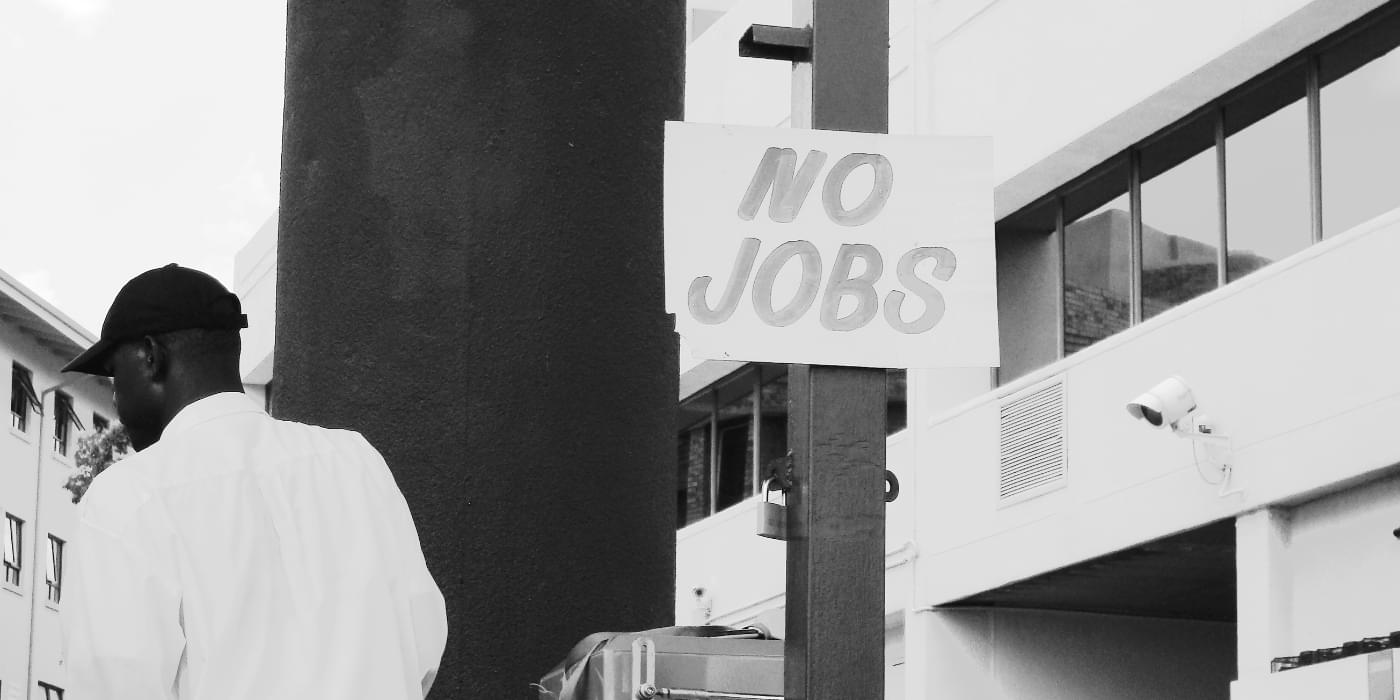
What happens when layoffs stop being a temporary response to crisis and become an ongoing business strategy? The rise of forever layoffs is reshaping work, wages, and worker leverage in the age of AI.
Table of Contents
Forever layoffs in 2026: What’s really happening?
You work for a tech company, and it’s 2026. It’s 6:02 on a Wednesday, so early that you haven’t even turned on the coffee maker. You reflexively check your Slack messages and find you’ve been locked out. Strange. Maybe it’s a mistake, some sort of password reset that you missed.
Your corporate email account pings with a new message. It’s the head of HR. What’s happening still hasn’t resonated with you. The headline indicates change. The dread only lingers in the back of your mind as you click it open. You’ve worked for this company for eight years. Surely that’s not about to change.
We have some regretful news about your position … That’s when it hits you. You scan the message in disbelief. Mass restructuring. Reduction in force. Position has been eliminated. Ending our working relationship. Immediate action required. Zero warning. In fact, last week the head of HR promised the company in the all-hands meeting that the “restructuring cycle” four months ago was the last for the year.
That’s just one fictitious scenario that reflects the reality of hundreds of thousands of workers around the globe as corporate speak tries (and fails) to soothe the burn of immediate job loss. Shiny buzzwords pepper the 2026 workforce. AI layoffs. Forever layoffs. Restructuring. Efficiency. Workforce optimization. Leaner teams. You know, the charming and practical phrases that make losing your livelihood sound like a productivity feature.
In my previous posts on AI job displacement and AI job loss, I looked at which jobs are most at risk, the most vulnerable demographics, and what workers can do to adapt. (TL;DR: The same marginalized groups are experiencing a disproportionately large job-loss and displacement gap.) This time, I’m looking at how AI fits into a broader culture of corporate layoffs.
We already know that AI is changing the workforce. Now, let’s look at whether companies are using AI to justify a more permanent shift toward leaner teams, ongoing workforce reductions, and a future where job insecurity becomes the norm rather than the exception.
Is AI really to blame for these changes? Or is it just the convenient excuse? Let’s examine the relationship between AI and forever layoffs.
What are forever layoffs?

Here’s a term you probably wish didn’t exist: forever layoffs. This increasingly common phrase describes a shift away from one-time, crisis-driven layoffs toward ongoing, rolling workforce reductions. Once upon a time, a worker could survive a layoff round and rest easy for a while. Now, there’s no time for cortisol to regulate, because the next one is right around the corner. (And who said corporate work was boring?)
Gone are the days of one-time mass job cuts followed by a period of rebuilding. Now “efficiency initiatives” and “mass restructuring” are happening every other quarter for plenty of companies around the globe. The constant fear of not surviving the next big layoff round makes the era of forever layoffs fundamentally psychologically destabilizing. And it comes with fewer warning signs.
Job performance no longer functions as a metric for safety. There was once a time when workers feared recessions. Now, the growing threat is success that excludes them. AI replacement may not have created that reality, but it has made it harder to ignore.
How many people lost their jobs?
Just how bad are forever layoffs? In late 2025, Fortune reported in Yahoo! Finance that U.S. employers had announced 1,170,821 job cuts through November, up 54% from the same period in 2024. That made 2025 one of only six years since 1993 where announced layoffs through November exceeded 1.1 million.
Many of these numbers come from tech layoffs. As I write this on May 30, 2026, there have already been major layoffs reported at 354 tech companies that are impacting 148,092 people and their families. An estimated 987 tech workers are losing their jobs every day this year. Add in the quarter of a million people affected by 2025’s tech layoffs, and the scale of the disruption becomes difficult to ignore.
Are AI layoffs really about AI?

It’s no secret that forever layoffs emerged as AI entered the workforce with all the subtlety of a tsunami. But is AI really the catalyst, or simply the excuse? Enter another term I wish didn’t have to be part of the 2026 vocabulary: AI-washing. (Consider it the PR strategy behind forever layoffs.)
AI-washing is when companies use AI language to make ordinary corporate behavior sound more innovative, inevitable, or futuristic than it really is. As unemployment rises, not every layoff described as an “AI transformation” is actually caused by AI. Increasingly, the phrase is becoming a catch-all piece of corporate speak used to frame cost-cutting, restructuring, and workforce reductions as technological progress.
Estimates suggest that up to 60% of current jobs will require significant adaptation due to AI, creating pressure for companies to restructure roles and workflows. But here’s an important distinction: AI is not making these decisions. People are deciding which roles to automate and which workers to replace. One has to wonder how often AI is used as a convenient narrative for outsourcing, restructuring, shareholder pressure, and broader efforts to reduce labor costs.
Many major tech and tech-adjacent companies have announced layoffs while discussing AI, automation, restructuring, or efficiency. The distinction between genuine AI transformation and a convenient corporate narrative matters. When a company claims it’s replacing part of its workforce with AI, it can present the decision as innovation. You know what sounds a bit less inspiring? Saying jobs are being cut to reduce labor costs and keep investors happy.
Why profitable companies are still firing workers
The contradiction at the center of this entire forever layoffs conversation is that mass job loss is not limited to failing companies. But why is this occurring?
Oracle is a high-profile example. TIME reported that Oracle layoffs came as the company had a market cap above $400 billion and had just reported its best growth quarter in 15 years. Forbes also reported that Oracle laid off 30,000 workers while posting record revenue and a $553 billion backlog.
Part of the explanation is straightforward. Many companies are reallocating spending toward AI infrastructure, cloud services, data centers, and compute capacity. Leaner staffing models can also appeal to investors focused on efficiency and margin growth.
But the picture may be more complicated than headline earnings suggest. Some analysts have argued that a portion of recent AI-era earnings growth reflects investment gains and valuation increases rather than revenue generated from core business operations.
According to Goldman Sachs, a significant share of profits reported by major cloud providers in early 2026 came from investment-related gains tied to private AI companies rather than core business operations. In other words, some reported earnings reflect increases in asset values on paper, not just cash generated through everyday business activity.
For workers, the message can feel daunting: the company can be healthy, the business can be growing, the future can look bright — but none of that translates to job stability.
How language drives the forever layoffs era
Language has long since been used to gloss over reality. Corporations rarely admit “we want fewer workers.” Instead, it’s all about:
- leaner teams
- AI-enabled productivity
- strategic realignment
- operational efficiency
- automation-first workflows
- flatter structures
- resource reallocation
Some of those phrases may describe real business needs. But they also sanitize the truth of what’s happening. Workers are told to celebrate the same tools that may be used to justify cutting their teams.
Are forever layoffs helping companies?

Here is where the story once again gets complicated. Forever layoffs don’t seem to be slowing down at this moment, but that doesn’t mean they will necessarily continue. It appears that many AI layoffs aren’t the clean win they were sold as.
Gartner predicted that by 2027, 50% of companies that attributed customer service headcount reductions to AI would rehire staff to perform similar functions under different job titles. (More on the last part in a bit.) Gartner also predicted that 50% of organizations expecting to significantly reduce customer service staff due to AI would abandon those plans by 2027 because of the challenges of agent-less service models.
The problem with replacing workers is that human labor often contains invisible value. Companies don’t always recognize what a person was contributing until they’re gone. So in many cases, automating work doesn’t necessarily mean better quality. Furthermore, the financial case for human layoffs is also not as straightforward as many executives expected.
This year, reports have emerged that companies such as Microsoft and Uber were already reassessing internal AI adoption after costs grew faster than anticipated. Meanwhile, Nvidia’s Vice President of Applied Deep Learning, Bryan Catanzaro, remarked that for his team, “the cost of compute is far beyond the costs of the employees.“
Is the replacement fantasy failing? When it comes to forever layoffs, many reductions don’t appear to be permanent. A Robert Half study reportedly found that around 29% of companies surveyed had laid off workers after implementing AI, only to rehire them later in a trend dubbed “AI boomerangs.” (Finally, a term that means people are actually being hired.)
While companies often focus on efficiency gains, the long-term consequences of forever layoffs attributed to AI appear a lot more complicated.
Three hidden costs of the forever layoffs era

Forever layoffs do more than eliminate jobs and destroy livelihoods. (Notice, we haven’t really even dug into the morality of the latter.) They also can have major consequences for remaining workers, alter hiring pipelines, and create a workplace culture built around uncertainty.
1. Forever layoffs increase pressure on existing workers
Forever layoffs don’t just affect the workers who lost their jobs. This era fundamentally changes how people experience work. When job cuts and restructuring become recurring features of working life, remaining employees often must directly absorb the tasks of their former colleagues, now with the added stress that they could be next. And while AI tools can speed up work, this rarely translates to a reduced overall workload.
When layoffs happen quarter after quarter, even strong performers can begin to feel disposable. New technology stops feeling exciting and starts feeling threatening. Workers are asked to adapt faster, learn new tools, and increase productivity while simultaneously wondering whether they will still have a job next quarter. Over time, that uncertainty can reshape workplace culture and lead to constant job security fears, burnout, and reduced employer trust.
2. Forever layoffs tied to the disappearing entry-level pipeline
There is another long-term risk hiding beneath the surface of forever layoffs: the erosion of entry-level work. Most people become experts by starting as beginners. Junior developers fix small bugs, analysts clean data, and writers draft basic content. Those repetitive tasks build the experience needed for more complex work.
There are already signs that this process is underway. According to research cited by Fortune, 66% of hiring managers say recent hires are not fully prepared for their roles, largely because they lack experience. At the same time, 4.6 million students who wanted internships in 2023 were unable to secure one, despite 87% of employed graduates reporting that internships helped them land a job.
In other words: If companies automate too much entry-level work, they may save money today while discovering that removing the first rung of the career ladder creates a much larger problem down the road.
3. Forever layoffs may reduce worker bargaining power
When job cuts are a looming threat, employees may become less likely to negotiate salaries, ask for promotions, challenge unrealistic workloads, or leave unhealthy workplaces. If workers feel replaceable and job openings become harder to find, employers gain leverage. In that environment, wage growth can slow even without formal pay cuts.
Employees have less bargaining power, because if they push back too hard, they could fall victim to the next layoff round. The trend becomes even more interesting when companies begin rehiring after AI-related layoffs. Remember: Gartner predicts that many organizations that reduce headcount because of AI will eventually hire workers back to perform similar functions. But here’s a key prediction — they will be under different titles.
This begs an important question: are those workers returning to the same jobs, with the same responsibilities, and at the same pay? Or are forever layoffs creating a labor market where workers have less bargaining power and employers have more leverage to redefine roles, salaries, and expectations?
Ethical AI adoption: A solution to forever layoffs

AI isn’t going anywhere, but that was never up for debate. The point was never that companies should reject AI. That would be unrealistic, and honestly, not very useful. AI can remove tedious tasks, improve accessibility, and help workers become more productive. The strongest future of work is not human or AI. It’s human plus AI. The question is how to do this ethically.
Some companies and institutions are already beginning to grapple with the consequences of workforce disruption. In May 2026, the OpenAI Foundation announced a $250 million initiative focused on labor market research, worker support, retraining pathways, and policies designed to help workers adapt to AI-driven change.
Whether those efforts succeed remains to be seen, but they reflect an important reality: even the organizations building AI acknowledge that workforce disruption is a challenge worth taking seriously. Some countries are following suit, with policymakers pushing back on terminating employment for AI replacement. Businesses don’t need to wait for laws to catch up; they can also choose to take a stand.
A people-first AI strategy is not complicated. It means retraining before replacing. It means being transparent about automation plans. It means protecting entry-level pathways and involving workers in conversations about how AI will be deployed. Most importantly, it means treating productivity gains as something that should benefit workers as well as shareholders. Because after all, workers play an enormous role in making a company successful.
The forever layoff era is often framed as an inevitable consequence of technological progress. But technology does not make decisions. People do. The question is whether companies will use AI to build better workplaces or simply leaner ones. Workers should not be treated as expenses waiting to be optimized.
Continued Reading: AI Job Displacement: Who’s Most at Risk — And What Biases Are Being Amplified?
Title image by Hennie Stander on Unsplash.