Can love survive forgetting? An exploration of memory, identity, and why remembering may be humanity’s greatest act of resistance.
Table of Contents
The average lifespan of all combined cells in the human body is seven to ten years, yet our memory continues to outlast a decade of regeneration. Memory isn’t something we can simply eliminate, despite constantly advancing therapeutic intervention and new combinations of pharmaceuticals. But would we want to eliminate our memories even if we could?
Science fiction poses plenty of theoretical scenarios. Many of us have cried along to Eternal Sunshine of the Spotless Mind, secretly hoping for (or dreading) a world in which we could erase our ex-lovers yet still be drawn to them by an intrinsic connection. But would any such bond exist without memory?
Remembering is an act of not only identity but also resistance and responsibility. The following piece examines the fight for memory, the cost of forgetting, and how collective memory may be our most enduring act of love.
The importance of remembering

Reconstructing memory is an act of knowing yourself. Without memory you have no identity. – Augusto Góngora.
Memory forms the basis of who we are. That statement feels deceptively simple until you begin pulling at its edges. Remove memory and what remains? Our memories tell us where we have been, who we have loved, which streets lead home, and which ones we avoid. They allow us to recognize our mother’s voice in a crowded room or the posture of our lover on a busy street.
Memory is the ultimate act of self-construction. Our memories gradually assemble until our experiences layer and our identities emerge. Yet memory never belongs entirely to individuals. Families become archives of shared stories. How many times have seemingly lost moments been brought back to life by a simple “Do you remember when …?” Experiences we thought we lost are kept alive by those who lived — and endured — them alongside us.
Our collective histories are shaped by each act of retelling. This is also how communities are built. On an even bigger scale, nations cement their stories through museums, monuments, books, films, and classrooms. They decide what deserves preservation and, just as significantly, what deserves forgetting.
Who remembers for a nation?
The act of forgetting holds just as much weight as the power of remembering. So who remembers for us when we’re asked to forget? Few people have embodied the responsibility of group memory more completely than Chilean journalist Augusto Góngora.
Góngora spent decades documenting human rights abuses committed during Augusto Pinochet’s dictatorship, a regime built not only on violence but on silence. He worked in the underground resistance to secretly document state violence and preserve testimony that many in power hoped would vanish with time. Góngora later participated in the ‘NO’ campaign that helped bring an end to Pinochet’s rule before becoming one of Chile’s most respected cultural journalists.
Through television, writing, and film, Góngora continued building an archive against forgetting. The fight to remember became an act of resistance to a regime that not only attempted to erase people but eliminate any memory of their existence. Every interview, recording, and report that refused to allow the atrocities to be concealed or rewritten stand as a testament to what really happened.
Journalists like Góngora risked their lives to become the memory for their country. The act of preserving the truth meant that people who lost their lives would not be forgotten. It also allowed for history to be accurately depicted.
Why we cannot allow history to forget
Those who cannot remember the past are condemned to repeat it. – George Santayana
People like Góngora have such a tremendous impact on history, because they refuse to allow history to be sanitized and softened. Every act of societal documentation — museum exhibits, archives, textbooks — serves to either preserve the truth or create a misleading narrative that protects the people and classes in power.
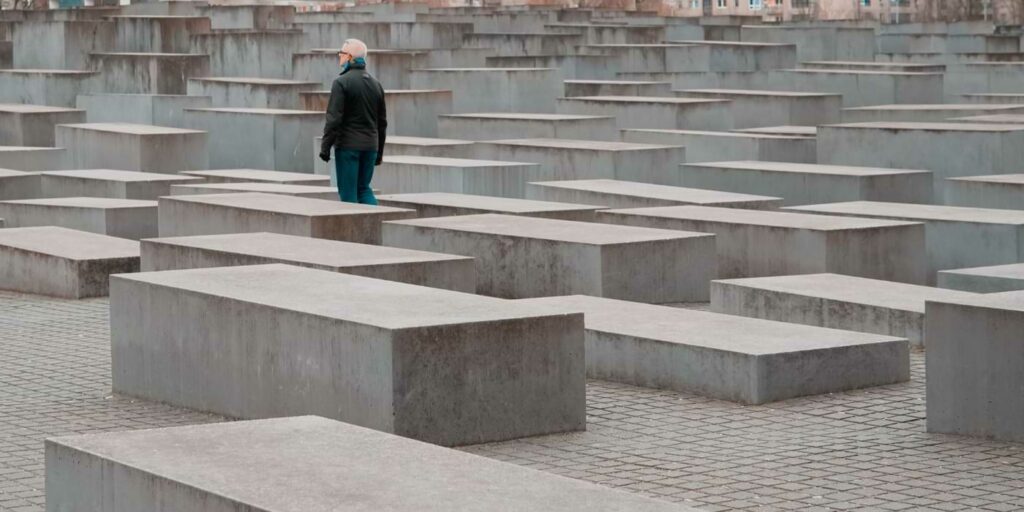
Preserving past atrocities prevents the passage of time from erasing them. This is why Holocaust remembrance remains one of humanity’s greatest moral responsibilities. Not only does the act of remembering honor the dead, but remembrance is also an act of prevention.
Storytellers, survivors, and historians like Elie Wiesel, Primo Levi, and Art Spiegelman have understood the gravity of remembering. Spiegelman, for example, transformed inherited trauma into Maus, an incredible graphic novel that depicts his father’s experiences as a Holocaust survivor. Such an act of recording and creation demonstrates how memory can travel across generations to reshape lives long after the events themselves have ended.
The Holocaust did not conclude with liberation. Its memory continues through survivors, museums, literature, photographs, and testimony. Everyone who reads Night in school or visits a Holocaust museum becomes another keeper of memory. Because, as history shows us, forgetting has consequences.
How does erasure begin? People are disappeared. Stories are censored. Books are burned. School curricula are strategically rewritten. Testimony is dismissed. Photographs are destroyed. Language changes. Eventually entire communities become abstractions rather than neighbors.
The cost of remembering is grave. As anyone who has read Lois Lowry’s The Giver knows, remembering is an incredible burden. But it’s also a great privilege and responsibility to remember. And perhaps it’s what we inherit from our ancestors and owe to humanity. We are not responsible for the crimes that came before us, but the least we can do is remember what happened to avoid having it repeat.
Continued Reading: Examining Fascism in the United States
What happens when memory disappears?
No matter how much suffering you went through, you never wanted to let go of those memories. – Haruki Murakami
If memory builds identity, what happens when it begins to disappear? This question has occupied philosophers for centuries. If every memory that shaped you slowly vanished, would you still be yourself? Or are we nothing more than the stories we continue telling ourselves? Unfortunately, many people have an inkling of what it means to forget by witnessing memory loss firsthand.
Like many families, ours became fluent in the terrible language of dementia when my grandmother developed the illness. My family learned to answer the same question five times without frustration, gently redirect conversations, and patiently preserve an ever-eroding past. But my grandmother was not alone. My family stayed by her side until her death in 2025, carrying the memories that she could no longer reliably access.
When she forgot names, our family remembered them for her. My parents printed out photos and labeled them. They gently reminded her who we were. We told her that the man standing in front of her with grey hair was the son she remembered as a little boy. Her memory flickered out and stuttered, but my family stood as keepers of her memories. Even now, a year after her death, her triumphs, struggles, hopes, and dreams live on through our remembrance.
Continue Reading: Inside Dementia: A Look Into My Grandmother’s Mind
Can love survive forgetting?
Unfortunately, my grandmother’s fate closely parallels the cruel irony of what happened to Góngora later in life. The man who spent his life preserving the memory of a nation slowly began losing his own. In 2014, he was diagnosed with Alzheimer’s disease.
Maite Alberdi’s documentary The Eternal Memory follows Góngora and his wife, Paulina Urrutia, through his identity’s slow unmaking. Watching the film, I found myself returning to a question that echoes throughout this essay: If memory forms identity, what remains of us when it begins to disappear?
Perhaps we can find that answer in love. It’s tempting to believe that even if memory fades, some innate bond will cause our loved ones to cherish us anyway. But as we witnessed with our grandmother, even once beloved faces become strangers if you cannot remember a shared history. In fact, towards the end, she couldn’t even recognize herself.
And yet, there is a tremendous love that exists in the people who still remember. While Góngora forgot, Paulina remembered. In the documentary that preceded his death in 2023, she gently tells him where he is, who he is, and what they’ve shared together. Like my family, she became an external archive that carried fragments of a life that could no longer be held by one mind alone.
The collective act of memory
When an elder dies, a library burns to the ground. – African proverb
Political forgetting is not so different from neurological forgetting. Whether the brain is losing its memories or history is turning a blind eye, connections are erased and identity is fractured. Those who remain are left responsible for carrying what can no longer be carried alone.
Watching someone lose their memory is a peculiar kind of grief, because you find yourself mourning someone who is still sitting in front of you. But through the act of losing, it becomes clear that memory is never entirely individual.
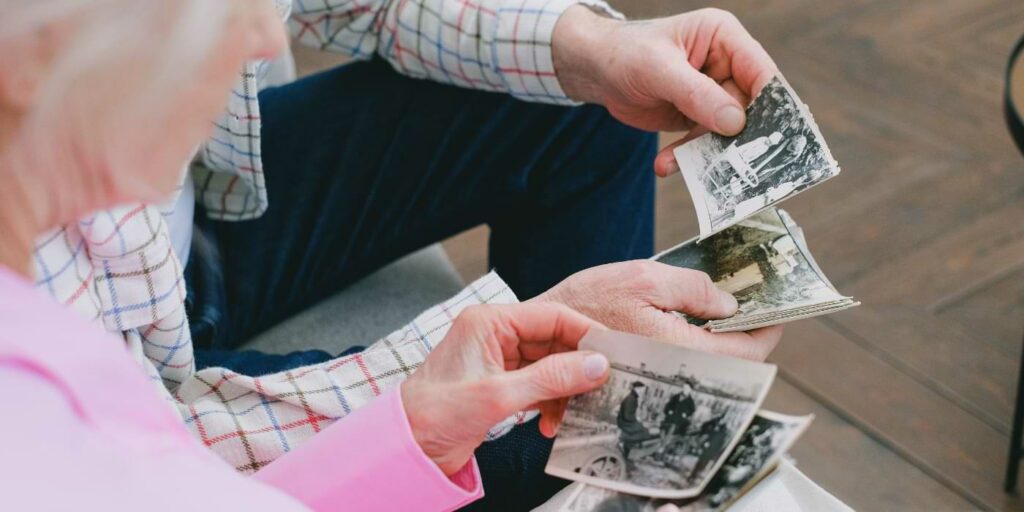
Maybe memory has always been a collective act. How many parts of us survive because we remember for one another? Families remember together. We remind one another of past holidays, old arguments, birthdays, former houses, terrible haircuts, and naughty dogs. Every photograph becomes an external hard drive for a life that will someday flicker and fade.
There are so many acts of remembrance that keep us afloat. Survivors grow old, but museums preserve their testimony. Writers document what ordinary conversation cannot contain. Children inherit stories they never lived but nevertheless carry forward. Every testimony, photograph, poem, diary entry, and history book insists that a moment once existed and deserves to continue existing.
We become ourselves through memory, but we remain ourselves because other people carry pieces of us, too. Remembering, then, is more than mere recollection. It’s both identity and resistance. And it’s one of the deepest acts of care we can offer another human being.
Title image by Yulia Ilina for Pexels.